- +36 30 114 1646
- zenebolt@kalaka.hu
- Hétfő- Péntek: 10:00 - 18:00

3 200 Ft
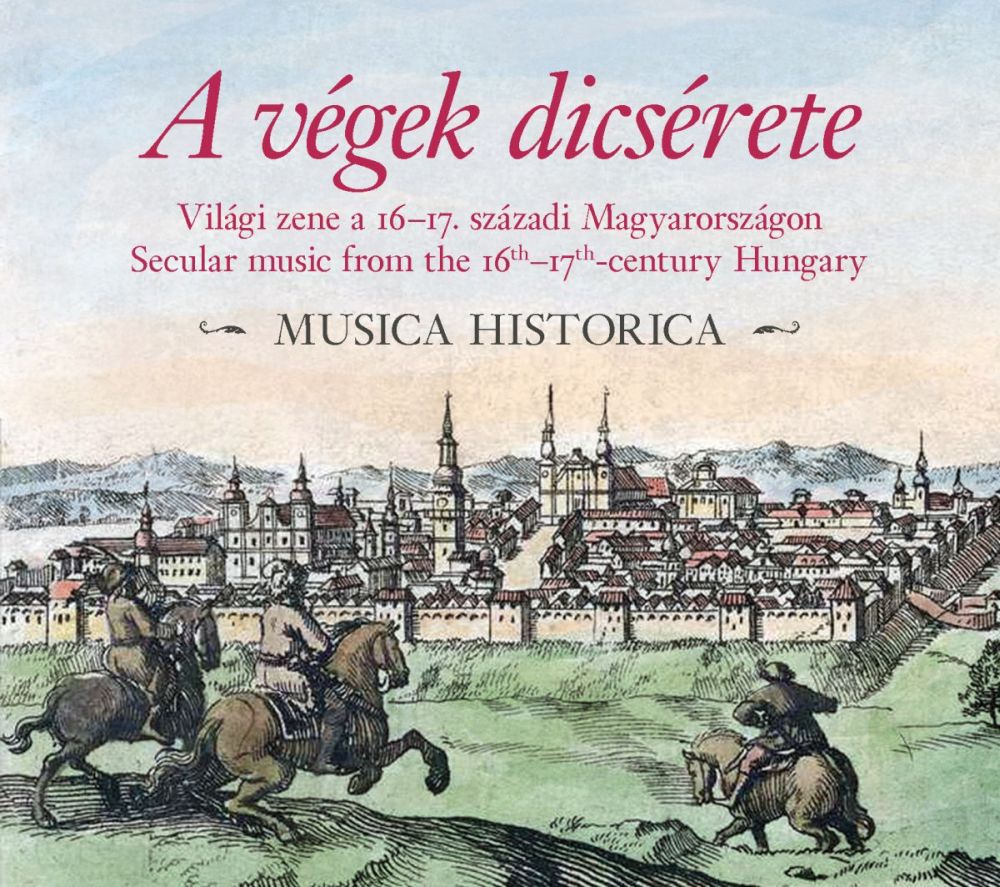
Musica Historica együttes: A végek dicsérete
Világi zene a 16–17. századi Magyarországon
Magyarország a 16–17. században Közép-Európa egyik legmozgalmasabb történelmű térsége volt. Itt húzódott a Török Birodalom és Nyugat-Európa határa, fontos végvárak és városok épültek itt, melyek hol a keresztények, hol a törökök kezére kerültek. A tragikus mohácsi csata (1526), majd Buda, a királyi főváros török kézre kerülése (1541) nyomán három részre szakadt az ország. E különös történelmi helyzet nagy hatással volt az interetnikus viszonyokra, az egyéni sorsokra, a kultúra és a kereskedelem mozgására. Lemezünk a Magyarország határvidékét védő végvári katonákra, a környező városok háborús és békés hétköznapjaira emlékezik.
A 16. század zenéjéből válogató rész magyar indulókkal, illetve hajdútáncokkal kezdődik (1). Ezt a tánctípust az egész Kárpát-medencében ismerték, s nemcsak a katonák, hanem a főurak is kedvelték (pl. Balassi Bálint és Esterházy Pál). A lemezen több, népzenei rokondallam is hallható. Beriszló Péter a 16. század elején, még a török invázió volt veszprémi püspök és szlavón bán. Török elleni haditetteit, a szandzsákbég fogságba ejtését egykori deákja, Szabatkai Mihály énekelte meg (2). A mohácsi csatáról szóló legkorábbi híradások közé tartozik a valószínűleg még 1526-ban írt cseh históriás ének (3). A csata után II. Lajos özvegye, Habsburg Mária királyné menekülni kényszerült Magyarországról. Neki tulajdonítják a Mag ich unglück kezdetű búcsúéneket, amelyet Ludwig Senfl reneszánsz feldolgozásában mutatunk be (5).
A históriás ének műfaja Magyarországon is virágzott. A legismertebb énekszerzőnk Tinódi Sebestyén (?–1556), aki ifjúkorát a Dunántúlon töltötte, majd Kassán telepedett le, s élete végén Sárvárra, Nádasdy Tamás nádor udvarába költözött. Életművét, a Cronicát 1554-ben Kolozsváron nyomtatta ki, s a versek mellett kottákat is közölt. Két elhangzó énekében a török elleni harcra szólítja fel a magyar nemeseket (8–9).
Az ország széttagolódásához a Bécset is veszélyeztető dunántúli török előrenyomulás is hozzájárult. Már I. Habsburg Ferdinánd király – akire egy udvari táncával emlékezünk (7) – számos ösztönzést kapott hadjáratok indítására. Szigetvár volt az egyik kulcsfontosságú erőd délnyugaton, melyet 1566-ban foglaltak el a törökök. Zrínyi Miklós hősi halálának nemcsak dédunokája állított emléket Szigeti veszedelemmel, hanem már az ostromot követő években énekeltek róla, például az osztrák Lorenz Wessel (13). A korabeli Magyarország romlását siratja egy lengyel költő panaszéneke (1558; 10) és a magyar Bornemisza Péter is: „vajon s mikor lészen jó Budában lakásom?” (1564 k.; 11).
Mindemellett a 16–17. században sem éltek tánc és mulatság nélkül a magyar végeken, s az urak udvarában sem. A lemezen rövid lengyel táncdallamok (6, 12, 14–15) mellett a moldvai népzenéből való hajdútáncok is megszólalnak (17). Legnagyobb reneszánsz költőnk, Balassi Bálint (1554–1594) két éneke a tavaszidőt és a vitézi élet szépségeit dicséri (16). A kedvesét hazaváró lány éneke (Hová készülsz, szívem; 19) a magyar barokk szerelmi líra egyik legszebb emléke.
A 17. század közepén egy reményteli periódus következett a térség történelmében. Ezt jelzik a szép számmal születő vitézi énekek, köztük Esterházy Pál barokk himnusza (24). A vitézi énekköltészet két szép darabja a magyar katonák hitvallása 1594-ből, illetve egy hasonló ének 1648-ból (18). Nemzetközi hatású személyiség volt a költő-hadvezér Zrínyi Miklós (1620–1664). A Fegyvert s bátor szívet kezdetű ének Az török áfium ellen való orvosság című röpiratának verses átirata, harcra bátorító ének (20). A tehetséges hadvezér egy tragikus vadászbalesetben halt meg 1664 novemberében, az ismeretlen költők ezt is versbe szedték (21), csakúgy, mint hajdani katonája, Balogh Zsigmond búcsúzását vitéz társaitól (22). Budát 1686-ban felszabadította a Szent Liga nyugati serege; a londoni John Playford még egy country dance-t is kiadott tisztelgésképp (25). A Tücsöklakodalom már e korszakból való (28). A kor hangszeres zenéjéből Daniel Speer, sziléziai toronyzenész és kalandor által kiadott magyar és kelet-európai táncokat mutatunk be (1688; 23), továbbá a soproni virginálkönyv (1689) számos népi változatból ismert táncait (29).
*
Ez éneket Móduvában,
Szörzék kincses Kolozsvárban,
Simándon, Egren, Tokajban,
Vándorutcában, szállóban.
A Musica Historica együttes tizedik önálló CD-jét élő koncertfelvételekből állítottuk össze (2007–2026), öt ország sokféle színpadáról. E zenés képeslapokon az eredeti akusztika (várudvar, templom, dzsámi, török fürdő), madárfütty és a közönség is hallható – ez az élő előadás varázsa. A Mohács-emlékév és mestereink előtt tisztelgünk vele, akik révén már fél évszázada virágzik Magyarországon a régizenei mozgalom. Több olyan mű elhangzik a lemezen, amelyeket tőlük hallottunk először az 1980-as években (Kecskés együttes, Kobzos Kiss Tamás, Camerata Hungarica), más darabokról eddig nem készült felvétel sem itthon, sem külföldön. A lényegük azonban közös: ötszáz éve segítenek a történelemről zenében gondolkodni.
Részletes műsor / Detailed program
1 Magyar indulók / Hungarian marches (16. század) 3:47
Ungaresca (1578)
2 Szabatkai Mihály: Berizló Péter veszedelme (1515) 3:00
Mihály Szabatkai: Historical song about Péter Berizló (1515)
3 O krále Ludvika porážce. Cseh história a mohácsi csatáról (1526) 2:50
Czech historical song about Mohács battle (1526)
4 Solakzade: Peşrev. Török hadizene (17. század) 2:17
Ottoman military music (17th century)
5 Ludwig Senfl: Mag ich unglück nit widerstan 2:31
6 Chorea ad novem saltus 1:30
7 Ferdinandi 1:30
8 Tinódi Sebestyén: Verbőczi Imrének (…) viadalja (1542) 1:25
Sebestyén Tinódi: About a victory of Imre Verbőczi (1542)
9 Tinódi Sebestyén: Hadnagyoknak tanúság (1550) 1:52
Sebestyén Tinódi: Teaching of officers (1550)
10 Mieli-ć bogaci Węgrowie. Lengyel siratóének Magyarországról (1558) 1:49
Polish lament song about Hungary (1558)
11 Bornemisza Péter: Cantio optima (1564 k.) 1:55
Péter Bornemisza: Farewell song from Hungary (1564 k.)
12 Szewczyk idzie po ulicy 1:32
13 Lorenz Wessel: Zriny’s Tod. Osztrák história Szigetvárról (1571) 3:02
Lorenz Wessel: Zrínyi’s death. Austrian historical song about fall of Szigetvár (1571)
14 Jeszcze Marcinie (Passamezzo antico) 1:14
15 Bauerntanz 1:00
16 Balassi Bálint / Bálint Balassi:
a) Borivóknak való (A tavaszidő dicsérete) / Song for wine drinkers (The praise of the springtime) 4:28
b) Egy katonaének, a végek dicsérete / The praise of the border fortresses
17 Bákói hajdútáncok 2:18
Hajdú dances from Bacău region
18 Az vitézek kardjainak (1594) – Zöldítsed, Úristen (1648) 4:12
Two soldier’s songs (1594, 1648)
19 Hová készülsz, szívem, tőlem elbujdosni? 4:24
Where are you going, my heart, to wander away from me?
20 Fegyvert s bátor szívet 1:58
Arms and a brave heart (propagandic song, 1650s)
21 Vedd föl gyászruhádot. Ének Zrínyi Miklós haláláról (1664) 2:47
Put on your mourning clothes. Dirge about Miklós Zrínyi’s death (1664)
22 Balogh Zsigmond: Bánotimnak örvényében (1664 k.) 3:37
Zsigmond Balogh: In the whirlpool of my sorrows. Farewell song (1664 k.)
23 Táncdallamok két töröksípon (1688) 2:19
Dance tunes on two Turkish pipes (1688)
24 Esterházy Pál: A hadverés egyedül Istentől van (1660 k.) 4:12
Pál Esterházy: Only God can beat the armies (1660 k.)
25 The Siege of Buda 0:51
26 Klobuczky tancecz 0:51
27 Sípos 1:30
28 Tücsöklakodalom (1704) 2:55
The Cricket’s Wedding (1704)
29 Soproni táncok (1689) – Hétfalusi borica – Dudamuzsika (1688) 5:24
Dances from Sopron (1689) – Carnival dance from Hétfalu – Bagpipe tunes (1688)
Előadók / Performers
Csörsz Rumen István – ének / voice; lantok / lutes; koboz / kobsa; tambura / tambur; psalterium / psaltery; barokk gitár / Baroque guitar; ciszter / cittern; duda / bagpipe; töröksíp / Turkish pipe; görbekürtök / crumhorns
Farkas Zoltán – cselló / cello; cintányér / cymbal
Juhász Viktor – cselló / cello
Kasza Roland – nagydob / bass drum; derbuka; triangulum / triangle; cintányér / cymbal; csörgők / jingles; spinét / spinet
Kovács Attila – kórus / choir; koboz / kobsa; tenor viola da gamba / bass viol; psalterium / psaltery; furulyák / recorders; zergekürt / gemshorn; görbekürtök / crumhorns; cintányér / cymbal
Miklós Gabriella – tenorfurulya / tenor recorder; zergekürt / gemshorn; tenor viola da gamba / bass viol
Palócz Réka – szoprán / soprano; hárfa / harp; furulya / recorder; basszus cornamusa / bass cornamusa; doromb / Jew’s harp; csörgők / jingles; cintányér / cymbal; taps / hand clap
Pribay Valéria – kórus / choir; tenor viola da gamba / bass viol; cselló / cello
Sudár Balázs – koboz / kobsa; cintányér / cymbal
Széplaki Zoltán – ének / voice; furulyák / recorders; reneszánsz fuvolák / Renaisance flutes; töröksíp / Turkish pipe; görbekürtök / crumhorns; doromb / Jew’s harp
Szilágyi Márton – kórus / choir; hegedű / violin; fidula / fiddle
Tövisházi Zsófia – hegedű / violin; cintányér / cymbal
Vitárius Piroska – barokk hegedű / Baroque violin
A Csíkszeredai Régizenei Nyári Egyetem ütőhangszeres hallgatói (Ádám Julianna, Ifj. Filip Ignác, Bíró Árpád, Marton Loránd, Sudár Ákos, Szilágyi Anna Léna, Tankó Molnár Tamás), tanárok: Kasza Roland és Sudár Balázs / Students of percussion course on Summer Academy for Early Music, teachers: Roland Kasza and Balázs Sudár (
A felvételek helyszínei:
Bakonybél, erdei színpad / stage in the forest (2023)
Budapest, Budapesti Történeti Múzeum / Budapest History Museum (2022)
Budapest, Krisztinaváros (2014, 2019)
Budapest, Magyar Tudományos Akadémia, Felolvasó terem / Lecture hall of Hungarian Academy of Sciences (2019)
Budapest, Magyar Tudományos Akadémia, Kongresszusi terem / Congress hall of Hungarian Academy of Sciences (2007)
Budapest, Terézváros (2026)
Bursa, TR, egykori fürdő nagyterme / great hall of an Ottoman bath (2022)
Csíkszereda / Miercurea Ciuc, RO, Mikó-vár udvara / garden of the Mikó Castle (2012, 2015)
Gyalu / Gialu, RO, sátorszínpad / tent stage (2017)
Isztambul / Istanbul, TR, Beşiktaş, Süleyman Seba Kültür Merkezi (2022)
Nagymaros, római katolikus templom / Roman catholic church (2021)
Székelyudvarhely / Odorheiu Secuiesc, RO, Művelődési Ház / Cultural Centre (2021)
Székesfehérvár, Csók István Képtár / István Csók Gallery (2016)
Szigetvár, várdzsámi / castle mosque (2016)
Szombathely, evangélikus templom / Lutheran church (2013)
Tata, Hotel Kristály udvara / garden of Hotel Kristály (2019)
Tallinn, EST, Katarina Kirik / St. Catharine Church (2017)
Zselíz / Želiazovce, SK, Esterházy-kastély udvara / garden of Esterházy palace (2017)
Élő koncertfelvételek a Musica Historica együttes archívumából, 2007–2026
Live concert recordings from the archive of Musica Historica, 2007–2026
Szerkesztő, zenei rendező / Editor and musical producer: Csörsz Rumen István
Hangmérnök / Sound engineer, mastering: Restás Gergő, Oposszum Stúdió
Borítóterv / Layout: Szilágyi N. Zsuzsa
CD-gyártás / CD reproduction: DVD Master Kft., Budapest
A kiadást támogatta / Sponsored by:
Nemzeti Kulturális Alapprogram / National Cultural Found of Hungary
Külön köszönet / Special thanks:
Szabó Dávid, Hans Wieser, Hargita Megyei Művelődési Központ
Felelős kiadó / Publisher: Csörsz Rumen István
Budapest, 2026
CsRI 026
A Musica Historica együttes 1988-ban alakult Budapesten. Tagjai a klasszikus és régizene mellett magyar és kelet-európai népzenével is foglalkoztak, ami döntően formálta stílusukat. Munkájukat sokrétű zene- és irodalomtörténeti kutatás segíti, főként a 15–19. század zenekultúráját és irodalmát illetően. Ugyanakkor meggyőződésük, hogy a tudomány nem helyettesítheti a művészi invenciót, hiszen a régizene kísérletező, nyitott műfaj. Repertoárjukon egyaránt szerepel magyar és közép-európai muzsika (11–19. század), nyugat-európai középkori, reneszánsz és barokk szerzők zenéje, sőt ógörög és török zene is.
Az együttes több mint 1500 alkalommal lépett fel, például rangos fesztiválokon (Kaláka Fesztivál, Csíkszeredai Régizene Fesztivál, Szent György Napok – Sepsiszentgyörgy, A középkori lélek fesztiválja – Segesvár, Musica Cortese – Gorizia, Dani Barokne Muzike – Újvidék stb.). Koncerteztek Közép-Európa és a Baltikum országaiban, Németországban, Olaszországban és Törökországban is. A végek dicsérete a tizedik önálló CD-jük, közreműködtek Kobzos Kiss Tamás két CD-jén és más antológiákon. Csíkszeredában, a Régizenei Nyári Egyetem keretében 2008 óta tartanak mesterkurzusokat és szakmai előadásokat.
* * *
Praise of the border fortresses. Secular music in Hungary in the 16th–17th centuries
In the sixteenth and seventeenth centuries, Hungary was one of the most historically turbulent regions of Central Europe. This was the border between the Ottoman Empire and Western Europe, where important fortresses and towns were built and repeatedly changed hands between Christian and Ottoman forces. Following the tragic Battle of Mohács (1526) and the capture of Buda, the royal capital, by the Ottomans (1541), the country was divided into three parts. The central territories came under Ottoman rule; the western and northern regions remained part of the Kingdom of Hungary within the Habsburg Empire; and Transylvania became an autonomous principality under Ottoman protection. This complex historical situation profoundly influenced inter-ethnic relations, individual destinies, and the circulation of culture and trade. Our album commemorates the soldiers defending Hungary’s borderlands, as well as the wartime and peaceful everyday life of the surrounding towns.
The section drawing on sixteenth-century music opens with Hungarian marches and hajdú dances (1). This dance type was known throughout the Carpathian Basin and was favored not only by soldiers but also by noblemen. Several melodies on the album belong to this genre and have close parallels in folk music. Péter Beriszló, bishop of Veszprém and ban of Slavonia (today Eastern Croatia) in the early sixteenth century, held these offices before the Ottoman invasion. His deeds against the Ottomans, including the capture of a sanjak-bey, were set to song by his former student, Mihály Szabatkai, 1515 (2).
Among the earliest accounts of the Battle of Mohács is a Czech historical song probably written still in 1526 (3). In the battle, the armies of King Louis II Jagiellon of Hungary and Bohemia clashed with the vast forces of Sultan Suleiman I. The king was killed, and his widow, Queen Mary of Habsburg, was forced to flee Hungary. She is traditionally credited with the farewell song beginning “Mag ich unglück nit widerstan,” which we present here in a Renaissance setting by Ludwig Senfl (5). The classical Turkish military music (e.g. Peşrev by Solakzade) was played by double-reeds (Turkish pipes), and percussions (4).
The genre of the historical song also flourished in Hungary, in the absence of a printed press. Its most renowned representative was Sebestyén Tinódi (c. 1500–1556). The volume of his collected works, the Cronica, was printed in 1554 in Kolozsvár (today Cluj-Napoca, RO), including both the poems and their musical notation. In two of the songs performed here, he calls upon the Hungarian nobility to take up arms against the Ottomans (8, 9). Beyond the occupation of Buda (1541), the Ottoman advance in Transdanubia, which also threatened Vienna, contributed to the fragmentation of the country. Even during the reign of King Ferdinand I of Habsburg—whom we recall with a court dance (Ferdinandi; 7)—numerous appeals were made for military campaigns, yet many border fortresses fell precisely because the imperial army failed to arrive. Szigetvár was one of the key strongholds of southwestern Hungary; in 1566 the courageous but abandoned Miklós Zrínyi could no longer hold the castle. His heroic death was commemorated not only by his great-grandson, the poet Miklós Zrínyi, in the epic The Fall of Sziget (Obsidio Sigetianae), but also in songs composed in the years immediately following the siege, e.g. the historical song by the Austrian Lorenz Wessel (Zriny’s Tod, “Zrínyi’s Death”; 13). The decline of contemporary Hungary is lamented both in a Polish poet’s complaint song (1558) and by the Hungarian writer and priest Péter Bornemisza, who wonders when one might “live again in Buda” (c. 1564).
Yet even in the 16th and 17th centuries, life on Hungary’s borders—and in the courts of the nobility—was not without dance and festivity. Alongside short Polish dance tunes (1540s; 6, 12, 14–15), the album features hajdú dances from Moldavian folk tradition (17). Two songs by Hungary’s greatest Renaissance poet, Bálint Balassi (1554–1594), praise the springtime and the beauties of the soldier’s life (16). The song of a young woman awaiting her beloved’s return (“Where are you going, my heart, to wander away from me?”) is among the finest examples of Hungarian Baroque love poetry (19).
In the mid-17th century, a more hopeful period emerged in the region’s history. This is reflected in the large number of heroic songs composed at the time, including Pál Esterházy’s Baroque hymn (“Only God can beat the armies”, 24). Notable examples of heroic song poetry include the Hungarian soldiers’ confession of faith from 1594 and a similar song from 1648: “O Lord, make the forests green again soon!” (18) An internationally influential figure was the poet and military commander, Miklós Zrínyi (1620–1664). The song beginning “Fegyvert s bátor szívet” (“Arms and a brave heart”, 20) is a versified adaptation of his pamphlet Remedy against the Turkish Opium, a rousing call to arms. The talented commander died in a tragic hunting accident in 1664; anonymous poets also set this event to verse, as they did the farewell of his former soldier, Zsigmond Balogh, to his comrades-in-arms (“In the whirlpool of my sorrows”, 22).
Buda was liberated in 1686 by the western armies of the Holy League. The tune “The Siege of Buda” was published by John Playford, London, as a country dance (25). “The Cricket’s Wedding” (28) already belong to this period. From the instrumental music of the era, we present Hungarian and East European dances published by the Silesian tower musician and adventurer Georg Daniel Speer (1688; 23), as well as numerous dances—known in many folk variants—from the Sopron Virginal Book (1689) (29).
*
This album is the tenth independent CD of the ensemble Musica Historica. Uniquely, it does not consist of studio recordings, but of live concert recordings made between 2007 and 2026 on stages in several countries.
Musica Historica ensemble was founded in Budapest in 1988. In addition to classical and early music, its members also play Hungarian and East European folk music, which decisively shaped their style. Their work relies on thorough research of the musical culture of the 15th–19th centuries. Nevertheless, they sustain that the scientific background cannot replace artistic invention, as early music is a genre open towards experimentation. The ensemble’s repertoire includes mainly Hungarian and Central European music from the 11th–19th centuries; besides, they also play the works of Western European composers from the Medieval, Renaissance and Baroque periods, as well as Turkish and ancient Greek music.
The ensemble has performed on more than 1,500 occasions at prestigious festivals in Hungary and abroad (Kaláka Festival, Csíkszereda Early Music Festival, Szent György Napok – Sfântu Gheorghe, Festival of the Medieval Spirit – Sighişoara, Musica Cortese – Gorizia, Dani Barokne Muzike – Novi Sad etc.), in the cities of Central Europe, the Baltics, Germany, Italy, Turkey etc. The Praise of Border Fortresses is their tenth individual CD and they have contributed to two CDs of Tamás Kobzos Kiss, and other anthologies. Since 2008, the members of the ensemble have been masterclass trainers and lecturers at the Early Music Summer University in Miercurea Ciuc, Romania.